%20(1).avif)

Unstarted is a new Z47 series, by founders, for founders.
Most people think they need more experience before they start.
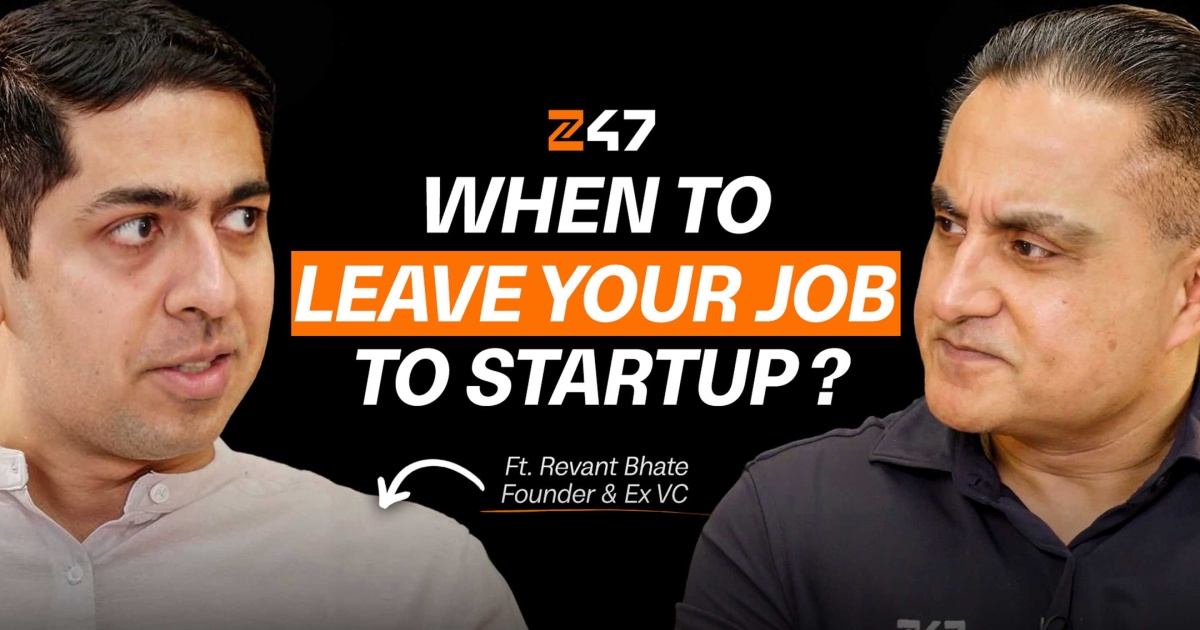
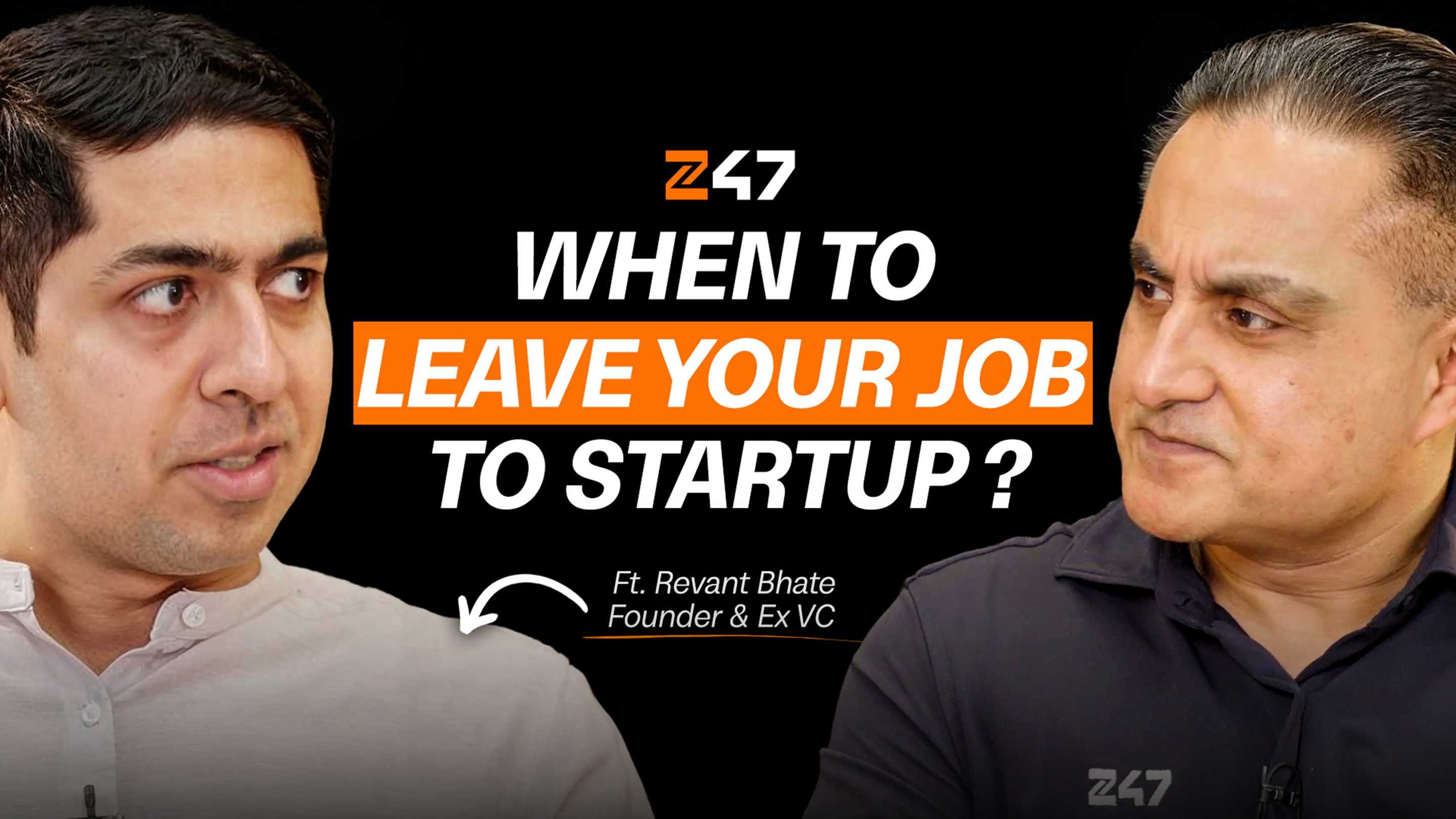
Revant Bhate spent years in venture capital before building Mosaic Wellness. During that time, his co-founder told him to leave VC. Every investor he worked with told him to leave VC. Kunal Shah told him in 2016. The message was the same, from every direction, for four years. He just wasn't ready to hear it.
That gap — between the signal being clear and the person being ready — is where most founder stories actually begin. Revant's is more honest about it than most.
1. Life is serendipity. That's not a problem.
Revant doesn't dress up his path. Computer science was cool in 2005, so he studied it. His co-founder nudged him toward an MBA. He followed people he respected and said yes to the right things at the right time. There was no grand strategy.
This matters because the founder mythology we consume is almost entirely retrospective — clean narratives assembled backwards from success. Most founders built their path by following good people and staying curious, not by executing a vision they had at 22. Admitting that isn't weakness. It's data.
2. If two bosses tell you to quit, listen
Both of Revant's first managers told him he should start something. Not as encouragement — as feedback. He was, by his own description, a terrible employee. He didn't listen to people above him. He had his own ideas about how things should be done.
In most careers, that's a problem. In a founder, it might be the most important raw material you have. The same traits that make someone difficult to manage are often the ones that make a company go. If authority figures keep pushing you toward the door, it's worth asking which side of it you actually belong on.
3. Founder-market fit is everything. The idea is almost nothing.
Revant's view on pitching is clean: when he met his co-founder for Mosaic Wellness, the idea was almost irrelevant. What mattered was whether the founder was unbreakably suited to the problem. He calls the rest — the pitch deck, the market sizing, the numbers — the biggest myth in startup investing.
Ideas are plentiful and copyable. A founder who cannot be separated from a problem is not. If you're going into a room with investors, spend less time perfecting your slides and more time understanding why you, specifically, are the person to solve this.
4. Build a personal board — and learn how they think
Revant has a habit before big decisions: he asks himself what a specific trusted critic would say. Then he writes it down. Then he checks himself against it. He knows the thinking patterns of his advisors well enough to run the simulation without them in the room.
This is the underrated compounding effect of great mentors. The goal isn't access to their answers. It's internalising their frameworks until you can apply them alone at midnight when nobody's available.
5. Founders are broken people. That's fine.
The confidence you see on stage is real. So is the anxiety at midnight. Revant is unusually direct about this: founders project certainty because there's no other option, not because the doubt isn't there. Underneath, he says, most are carrying twenty unresolved things at once.
Knowing this doesn't fix anything. But it does mean the founder who seems most put-together in your cohort is probably managing the same chaos you are. The goal isn't to eliminate the doubt. It's to keep moving anyway.
The real takeaway
Six years into building Mosaic Wellness, Revant still says he's on the journey of figuring out what he wants. That's not a red flag. That's what honesty looks like from someone with enough data to know better.
The signal, when it comes, won't always be loud. But it will be consistent. And eventually, if you're paying attention, you'll be ready to hear it.





.webp)
%20(1).avif)
.svg)

.webp)