%20(1).avif)

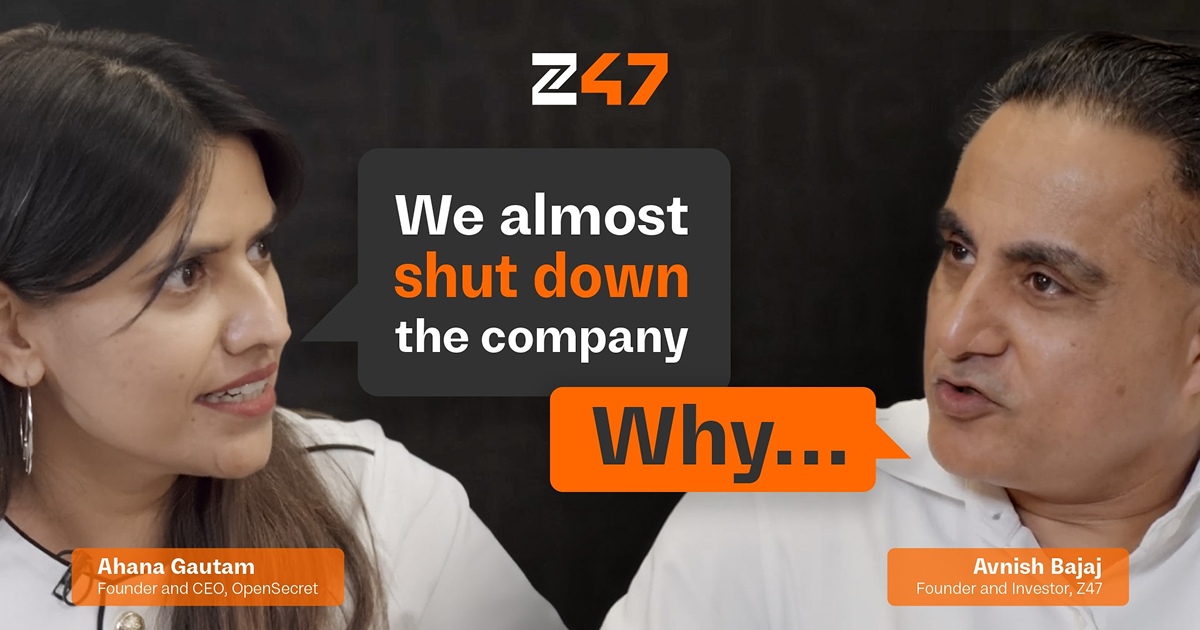
Ahana Gautam grew up in Bharatpur, a tier-three city in Rajasthan where female literacy is among the lowest in the country. She was overweight, academically average by her own admission, and surrounded by people who thought educating a girl too much would make her unmarriageable. Today she runs Open Secret, a fast-growing healthier snacking brand with 80% repeat revenue on quick commerce and a factory in Mumbai staffed almost entirely by women.
The distance between those two points is not talent. It's a very specific set of principles — ones every first-time founder should write down.
1. Intelligence is made, not born
Ahana is almost aggressive about this: she is not the smartest person in the room. She failed in school. What she has is resilience and discipline — and she insists those are learnable. Her phrase for it is "the power of compounding." Show up every day, get 1% better, and don't compare your chapter three to someone else's chapter twenty.
She also coined something worth stealing: positive dissatisfaction. A fire that keeps burning not because you're unhappy, but because you're always chasing the best version of yourself. Not someone else's version. Yours.
2. Decide with your heart. Execute with your head.
When Ahana faced the choice between staying in the US — visa, career, fall colours, Whole Foods — or taking a one-way flight to Bombay to build something uncertain, she made the decision with her gut. Then she never let herself revisit it.
Her rule: big life decisions belong to your heart. Once made, lock them away. Every day after that is about discipline, not doubt. You don't get to re-litigate the why on the hard days. You just go back to it for fuel and keep going.
3. Start with a wedge, not a vision
Open Secret started with biscuits and cookies — not because it was the most exciting product, but because biscuits are the most penetrated snacking format in India. Every household. Every day. That's your foot in the door. Once you're in, you earn the right to sell everything else.
This is called a wedge strategy, and it's one of the most underused tools in consumer businesses. Don't launch your full vision. Launch the thing that gets you into the room.
4. Your consumer should fund your business
After a failed experiment trying to build a "Whole Foods for India" — 50 crore in revenue at negative 47% EBITDA — Ahana learned the hard way that consumer businesses aren't consumer tech. There's no network effect that justifies burning capital endlessly. The metric that matters is repeats.
When Open Secret went back to basics, focused on product, and let customers come back organically, the model inverted: 170 crore in revenue, profitable. Capital can accelerate a working business. It cannot fix a broken one.
5. Obstacles are directions, not stop signs
Every obstacle in Ahana's life became a compass point. The threat of RD Girls College drove her to crack IIT. The all-male P&G factory floor drove her to ensure her own factory would look different. The critics at her mother's cremation only confirmed what her mother had always told her: keep breaking the status quo.
The lesson isn't to be fearless. It's to let the friction tell you where to go.
The real takeaway
On the worst nights — and she describes crying at her office at 11pm — Ahana goes back to her why. Not her pitch deck. Not her metrics. Her why. Her niece with Type 1 diabetes. The women on her shop floor on Saturday mornings discussing recipes. The tier-two families who deserve better food.
Purpose isn't a nice-to-have for founders. According to Ahana, it's the only thing that keeps the lights on when everything else goes dark.
Find your why. Then protect it like it's the company.




.webp)
%20(1).avif)
.svg)

.webp)