Z47
August 12, 2021

Founder Compensation

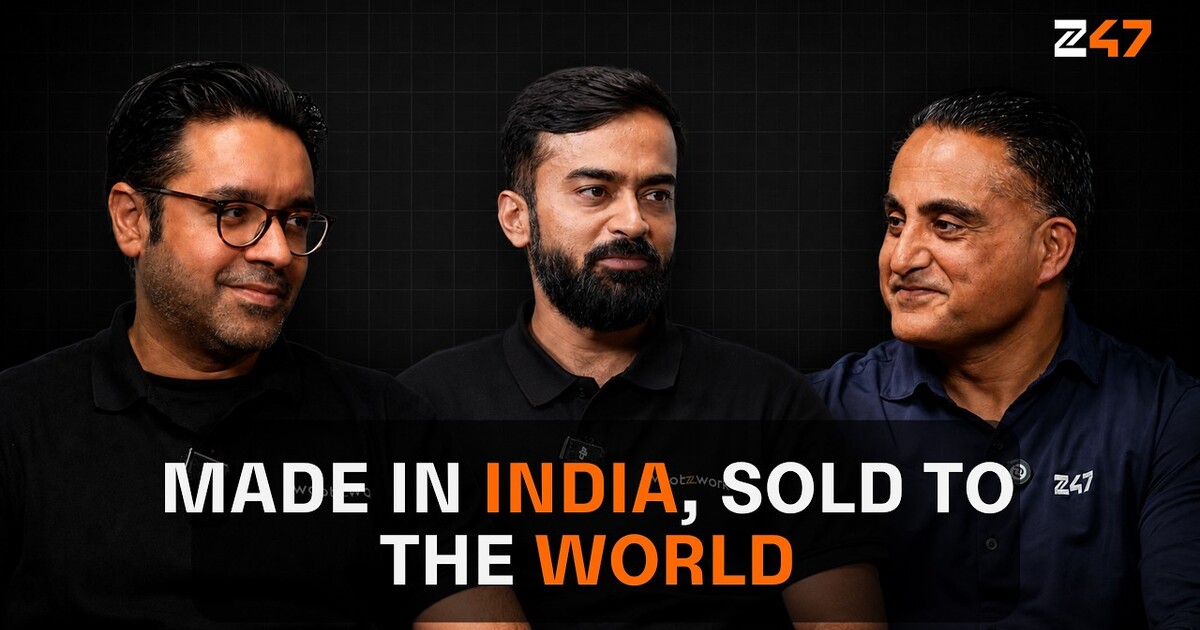
As a founder how do you determine what your own compensation should be? & what is the right salary to be drawn across stages?

Here's how we Matrix Partners India think about it, tune in:

Salonie:

How should founders be thinking about their own compensation and more importantly whose responsibility is this part, to think about?

Avnish:

Founder generally their opportunity cost is very high, there is no way that a company will be repaying a net market, is my guess, the real alignment with the founder’s interest comes because of their equity ownership and the investors equity ownership, they are putting in that opportunity cost for the equity ownership. That said, I believe founders should be compensated at some level of quote, un- quote fairness. Now that fairness is a very subjective talk, what I’ve observed as market practice is when companies don’t have much money just like we’ve talked about in the episode of burn-rates, typically founders will draw one and a half to two and a half lakhs a month, each of the founders.

And also remember founders are setting up a tone for their entire organization. I know companies like Ofbusiness where Asish prides himself of the fact that people have to join in by at least taking a 40 – 50% cut, otherwise they don’t have a founder’s mindset. So, I would say something like 30 lakhs, call it 2 lakhs to 2 ½ lakhs a month, 30 lakhs. Then going to 60 lakhs then crore, crore and a half, may be when a company has raised series B. But more importantly then a number, I do believe that companies need to have a performance driven culture and I think we probably discussed this in one of our episode’s. So I’m a strong believer in variable compensation, whatever be that no, two and a half lakh or 5 lakhs, pick whatever no, I believe companies should have and founders and senior management should have 50 to 100% more as variable compensation and in the process of deciding that carriable compensation it forces alignment between the board, the investors and the founders and I’ve talked about this rule of thumb before 50 to 100% at the founder level and each level below half of that should be variable, call it 25 to 50% at L minus 1 and so on and so worth. And it creates a performance driven culture that aligns the whole organization as well as the board and investors and typically the payout should be 80 to 120% of the targets of that company. Actually, we follow a similar_

Salonie:

At Matrix, I was just relating that.
For more information, write to us: namaste@Z47.com.
Stay connected with Z47.

Watch more such podcasts

Z47
July 2, 2026

How a Wall Street analyst quit everything to build a billion dollar business | Country Delight | Unstarted

Z47
June 25, 2026

Running two profitable unicorns in India | Asish Mohapatra, OfBusiness | Unstarted

Z47
June 18, 2026

What sports taught the Head of Spotify India about building a business | Unstarted

Z47
August 12, 2021

Founder Compensation

Article
Listen to article

As a founder how do you determine what your own compensation should be? & what is the right salary to be drawn across stages?

Here's how we Matrix Partners India think about it, tune in:

Salonie:

How should founders be thinking about their own compensation and more importantly whose responsibility is this part, to think about?

Avnish:

Founder generally their opportunity cost is very high, there is no way that a company will be repaying a net market, is my guess, the real alignment with the founder’s interest comes because of their equity ownership and the investors equity ownership, they are putting in that opportunity cost for the equity ownership. That said, I believe founders should be compensated at some level of quote, un- quote fairness. Now that fairness is a very subjective talk, what I’ve observed as market practice is when companies don’t have much money just like we’ve talked about in the episode of burn-rates, typically founders will draw one and a half to two and a half lakhs a month, each of the founders.

And also remember founders are setting up a tone for their entire organization. I know companies like Ofbusiness where Asish prides himself of the fact that people have to join in by at least taking a 40 – 50% cut, otherwise they don’t have a founder’s mindset. So, I would say something like 30 lakhs, call it 2 lakhs to 2 ½ lakhs a month, 30 lakhs. Then going to 60 lakhs then crore, crore and a half, may be when a company has raised series B. But more importantly then a number, I do believe that companies need to have a performance driven culture and I think we probably discussed this in one of our episode’s. So I’m a strong believer in variable compensation, whatever be that no, two and a half lakh or 5 lakhs, pick whatever no, I believe companies should have and founders and senior management should have 50 to 100% more as variable compensation and in the process of deciding that carriable compensation it forces alignment between the board, the investors and the founders and I’ve talked about this rule of thumb before 50 to 100% at the founder level and each level below half of that should be variable, call it 25 to 50% at L minus 1 and so on and so worth. And it creates a performance driven culture that aligns the whole organization as well as the board and investors and typically the payout should be 80 to 120% of the targets of that company. Actually, we follow a similar_

Salonie:

At Matrix, I was just relating that.
We are excited about the innovation and growth opportunities in this sector.

If you are considering building in the footwear space, we’d love to chat.
Drop us a line at consumer@matrixpartners.in

Learnt something new? Follow us!

Vs NIFTY 500
+9.1%
Since Jan 2024
USD/INR
₹95.19
▲ +0.6%
Daily change • 1 Ju1 2025
128.1
▲ +28.1%
Since Jan 2024
NIFTY 500
129.1
▲ +19.0%
Since Jan 2024

Index Performance

+28.1%
Since Jan 2024
NIFTY 500
+19.0%
Since Jan 2024

Z47^fortyseven is up +23.9% since its January 2024 base date, versus Nifty 500's +18.4%, ahead by 550 bps.

The cohort moved +4.7% over the month versus Nifty 500's +2.5%, leading by 220 bps.

Anchored in domestic demand and rising digital adoption, the cohort remained resilient amid global headwinds.

Consumer Tech was the best-performing sector at +9.2% last month, driven by sustained growth in consumer demand and strength in consumer-internet platforms.

Largest Constituents  ·  The Names That Anchor The Index

1.
Eternal
Quick-commerce leadership and continued investment
▲ +12.8%
2.
Groww
Broking market-share gains and margin-funding growth.
▲ +10.4%
3.
Lenskart
Store densification and margin expansion.
▲ +2.4%

Top Gainers  ·  Key Drivers

1 MONTH RETURN
1.
CarTrade
Auto-marketplace dominance and a cash-rich balance sheet.
▲ +59.4%
2.
 Amagi Media Labs
Profitability turnaround and AI-led cloud media adoption.
▲ +31.4%

Top Laggards  ·  Key Drivers

1 MONTH RETURN
1.
Fractal Analytics
Enterprise AI spending trends and post-listing share supply.
▼ -10.8%
2.
MedPlus Health
Pharmacy-margin pressure and competitive intensity.
▼ -6.6%

Key Themes  ·  Latest Results

In Q4FY26, Z47^fortyseven's cohort grew top line ~39% YoY, more than 3x the broad market's ~12% growth.

Operating leverage lifted net margins around 500 bps into positive territory, even as broad-market net margins remained roughly flat.

With 40 of 47 companies now profitable, the cohort reflects a broader shift toward profitable growth over growth at any cost.

AI adoption runs deeper across this cohort than in the broader market, with companies using it to drive growth and reshape demand, not just improve efficiency.

Cash generation is increasingly defining the winners, enabling market leaders like Eternal, CarTrade, and PB Fintech to fund acquisitions and expansion from their own balance sheets.

Market & Macro Context

The cohort saw several block deals this month, including sizeable stake sales in Lenskart, Delhivery, Honasa, and Shadowfax.

Ownership continues to shift from foreign investors to domestic institutions, creating a more durable shareholder base.

AI remained the defining technology investment theme, driving capital deployment across both private and public markets.

IPO Takeaway · Kissht

Listed May 2026

A modest listing pop followed by strong post-listing gains reinforced the market's preference for asset quality and disciplined underwriting over pure loan-book growth.

The listing helped reset perceptions around unsecured lending, creating a constructive valuation anchor for the issuers that follow.

The buyer mix was a notable positive — strong participation from long-only domestic institutions supporting a durable post-listing ownership base.

Net Read

Fundamentals continued to strengthen across the cohort, with growth, margins, and cash generation improving in tandem.

Performance dispersion widened, with profitability and earnings quality increasingly distinguishing the strongest performers from the rest.

Disclaimer

Z47^fortyseven is published for informational purposes only and does not constitute investment advice, or any offer, solicitation, or recommendation to buy or sell securities. Index performance is historical and should not be construed as indicative of future results.

Explore the live index
Read Previous Article On Land & Expand
Read Next Article On Land & Expand