Z47
March 5, 2026

What if my startup fails? | UnStarted

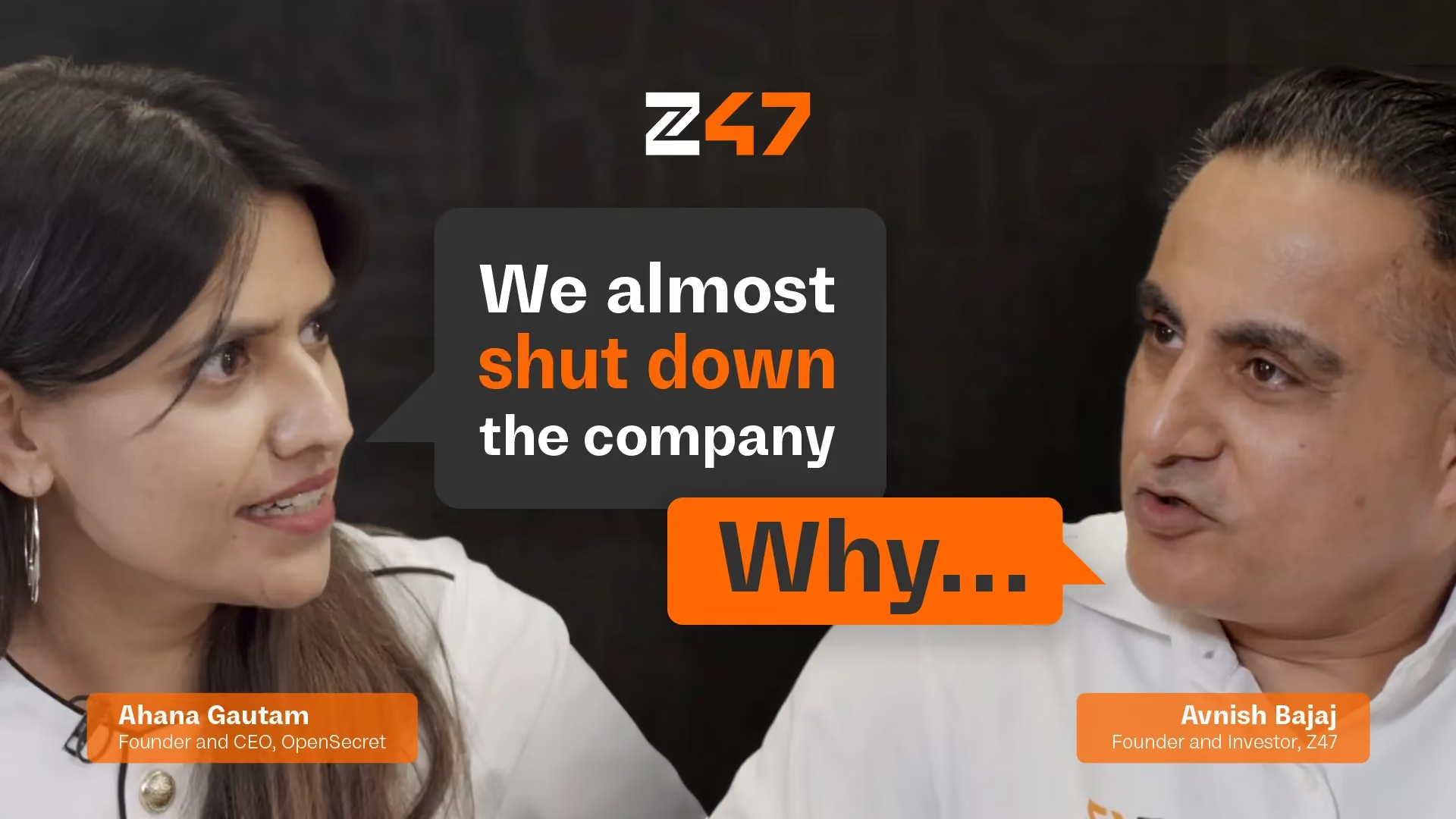
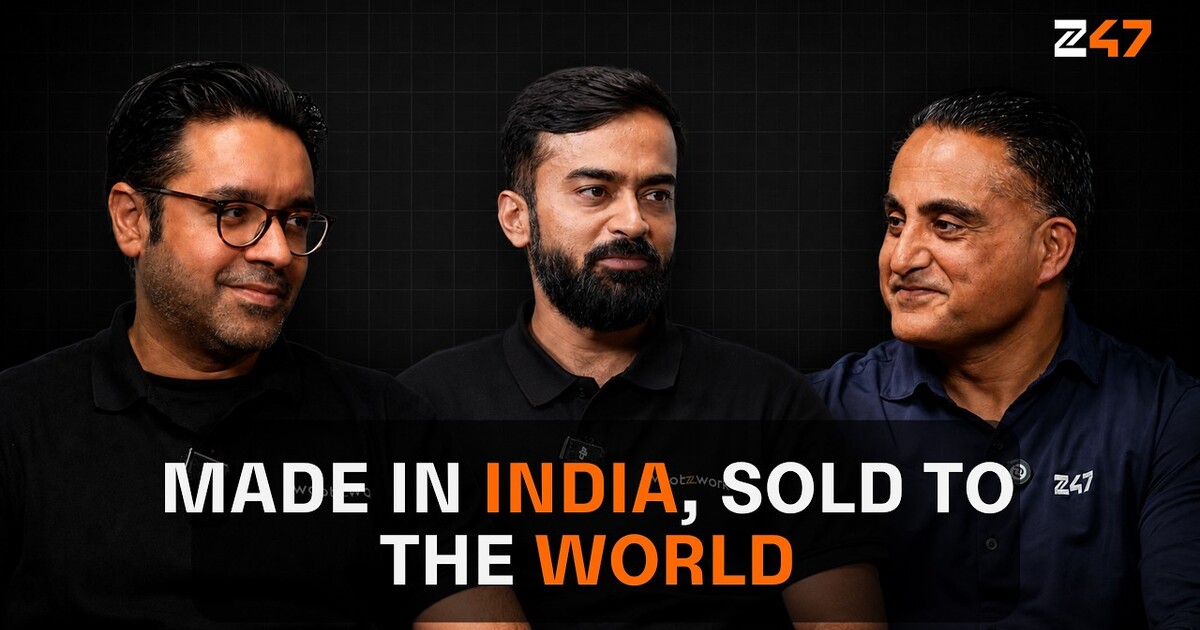
Ahana Gautam grew up in Bharatpur, a tier-three city in Rajasthan where female literacy is among the lowest in the country. She was overweight, academically average by her own admission, and surrounded by people who thought educating a girl too much would make her unmarriageable. Today she runs Open Secret, a fast-growing healthier snacking brand with 80% repeat revenue on quick commerce and a factory in Mumbai staffed almost entirely by women.

The distance between those two points is not talent. It's a very specific set of principles — ones every first-time founder should write down.

1. Intelligence is made, not born

Ahana is almost aggressive about this: she is not the smartest person in the room. She failed in school. What she has is resilience and discipline — and she insists those are learnable. Her phrase for it is "the power of compounding." Show up every day, get 1% better, and don't compare your chapter three to someone else's chapter twenty.

She also coined something worth stealing: positive dissatisfaction. A fire that keeps burning not because you're unhappy, but because you're always chasing the best version of yourself. Not someone else's version. Yours.
2. Decide with your heart. Execute with your head.

When Ahana faced the choice between staying in the US — visa, career, fall colours, Whole Foods — or taking a one-way flight to Bombay to build something uncertain, she made the decision with her gut. Then she never let herself revisit it.

Her rule: big life decisions belong to your heart. Once made, lock them away. Every day after that is about discipline, not doubt. You don't get to re-litigate the why on the hard days. You just go back to it for fuel and keep going.

3. Start with a wedge, not a vision

Open Secret started with biscuits and cookies — not because it was the most exciting product, but because biscuits are the most penetrated snacking format in India. Every household. Every day. That's your foot in the door. Once you're in, you earn the right to sell everything else.

This is called a wedge strategy, and it's one of the most underused tools in consumer businesses. Don't launch your full vision. Launch the thing that gets you into the room.

4. Your consumer should fund your business

After a failed experiment trying to build a "Whole Foods for India" — 50 crore in revenue at negative 47% EBITDA — Ahana learned the hard way that consumer businesses aren't consumer tech. There's no network effect that justifies burning capital endlessly. The metric that matters is repeats.

When Open Secret went back to basics, focused on product, and let customers come back organically, the model inverted: 170 crore in revenue, profitable. Capital can accelerate a working business. It cannot fix a broken one.

5. Obstacles are directions, not stop signs

Every obstacle in Ahana's life became a compass point. The threat of RD Girls College drove her to crack IIT. The all-male P&G factory floor drove her to ensure her own factory would look different. The critics at her mother's cremation only confirmed what her mother had always told her: keep breaking the status quo.

The lesson isn't to be fearless. It's to let the friction tell you where to go.

The real takeaway

On the worst nights — and she describes crying at her office at 11pm — Ahana goes back to her why. Not her pitch deck. Not her metrics. Her why. Her niece with Type 1 diabetes. The women on her shop floor on Saturday mornings discussing recipes. The tier-two families who deserve better food.

Purpose isn't a nice-to-have for founders. According to Ahana, it's the only thing that keeps the lights on when everything else goes dark.

Find your why. Then protect it like it's the company.
For more information, write to us: namaste@Z47.com.
Stay connected with Z47.

Watch more such podcasts

Z47
July 2, 2026

How a Wall Street analyst quit everything to build a billion dollar business | Country Delight | Unstarted

Z47
June 25, 2026

Running two profitable unicorns in India | Asish Mohapatra, OfBusiness | Unstarted

Z47
June 18, 2026

What sports taught the Head of Spotify India about building a business | Unstarted

Z47
March 5, 2026

What if my startup fails? | UnStarted

Article
Listen to article

Ahana Gautam grew up in Bharatpur, a tier-three city in Rajasthan where female literacy is among the lowest in the country. She was overweight, academically average by her own admission, and surrounded by people who thought educating a girl too much would make her unmarriageable. Today she runs Open Secret, a fast-growing healthier snacking brand with 80% repeat revenue on quick commerce and a factory in Mumbai staffed almost entirely by women.

The distance between those two points is not talent. It's a very specific set of principles — ones every first-time founder should write down.

1. Intelligence is made, not born

Ahana is almost aggressive about this: she is not the smartest person in the room. She failed in school. What she has is resilience and discipline — and she insists those are learnable. Her phrase for it is "the power of compounding." Show up every day, get 1% better, and don't compare your chapter three to someone else's chapter twenty.

She also coined something worth stealing: positive dissatisfaction. A fire that keeps burning not because you're unhappy, but because you're always chasing the best version of yourself. Not someone else's version. Yours.
2. Decide with your heart. Execute with your head.

When Ahana faced the choice between staying in the US — visa, career, fall colours, Whole Foods — or taking a one-way flight to Bombay to build something uncertain, she made the decision with her gut. Then she never let herself revisit it.

Her rule: big life decisions belong to your heart. Once made, lock them away. Every day after that is about discipline, not doubt. You don't get to re-litigate the why on the hard days. You just go back to it for fuel and keep going.

3. Start with a wedge, not a vision

Open Secret started with biscuits and cookies — not because it was the most exciting product, but because biscuits are the most penetrated snacking format in India. Every household. Every day. That's your foot in the door. Once you're in, you earn the right to sell everything else.

This is called a wedge strategy, and it's one of the most underused tools in consumer businesses. Don't launch your full vision. Launch the thing that gets you into the room.

4. Your consumer should fund your business

After a failed experiment trying to build a "Whole Foods for India" — 50 crore in revenue at negative 47% EBITDA — Ahana learned the hard way that consumer businesses aren't consumer tech. There's no network effect that justifies burning capital endlessly. The metric that matters is repeats.

When Open Secret went back to basics, focused on product, and let customers come back organically, the model inverted: 170 crore in revenue, profitable. Capital can accelerate a working business. It cannot fix a broken one.

5. Obstacles are directions, not stop signs

Every obstacle in Ahana's life became a compass point. The threat of RD Girls College drove her to crack IIT. The all-male P&G factory floor drove her to ensure her own factory would look different. The critics at her mother's cremation only confirmed what her mother had always told her: keep breaking the status quo.

The lesson isn't to be fearless. It's to let the friction tell you where to go.

The real takeaway

On the worst nights — and she describes crying at her office at 11pm — Ahana goes back to her why. Not her pitch deck. Not her metrics. Her why. Her niece with Type 1 diabetes. The women on her shop floor on Saturday mornings discussing recipes. The tier-two families who deserve better food.

Purpose isn't a nice-to-have for founders. According to Ahana, it's the only thing that keeps the lights on when everything else goes dark.

Find your why. Then protect it like it's the company.
We are excited about the innovation and growth opportunities in this sector.

If you are considering building in the footwear space, we’d love to chat.
Drop us a line at consumer@matrixpartners.in

Learnt something new? Follow us!

Vs NIFTY 500
+9.1%
Since Jan 2024
USD/INR
₹95.19
▲ +0.6%
Daily change • 1 Ju1 2025
128.1
▲ +28.1%
Since Jan 2024
NIFTY 500
129.1
▲ +19.0%
Since Jan 2024

Index Performance

+28.1%
Since Jan 2024
NIFTY 500
+19.0%
Since Jan 2024

Z47^fortyseven is up +23.9% since its January 2024 base date, versus Nifty 500's +18.4%, ahead by 550 bps.

The cohort moved +4.7% over the month versus Nifty 500's +2.5%, leading by 220 bps.

Anchored in domestic demand and rising digital adoption, the cohort remained resilient amid global headwinds.

Consumer Tech was the best-performing sector at +9.2% last month, driven by sustained growth in consumer demand and strength in consumer-internet platforms.

Largest Constituents  ·  The Names That Anchor The Index

1.
Eternal
Quick-commerce leadership and continued investment
▲ +12.8%
2.
Groww
Broking market-share gains and margin-funding growth.
▲ +10.4%
3.
Lenskart
Store densification and margin expansion.
▲ +2.4%

Top Gainers  ·  Key Drivers

1 MONTH RETURN
1.
CarTrade
Auto-marketplace dominance and a cash-rich balance sheet.
▲ +59.4%
2.
 Amagi Media Labs
Profitability turnaround and AI-led cloud media adoption.
▲ +31.4%

Top Laggards  ·  Key Drivers

1 MONTH RETURN
1.
Fractal Analytics
Enterprise AI spending trends and post-listing share supply.
▼ -10.8%
2.
MedPlus Health
Pharmacy-margin pressure and competitive intensity.
▼ -6.6%

Key Themes  ·  Latest Results

In Q4FY26, Z47^fortyseven's cohort grew top line ~39% YoY, more than 3x the broad market's ~12% growth.

Operating leverage lifted net margins around 500 bps into positive territory, even as broad-market net margins remained roughly flat.

With 40 of 47 companies now profitable, the cohort reflects a broader shift toward profitable growth over growth at any cost.

AI adoption runs deeper across this cohort than in the broader market, with companies using it to drive growth and reshape demand, not just improve efficiency.

Cash generation is increasingly defining the winners, enabling market leaders like Eternal, CarTrade, and PB Fintech to fund acquisitions and expansion from their own balance sheets.

Market & Macro Context

The cohort saw several block deals this month, including sizeable stake sales in Lenskart, Delhivery, Honasa, and Shadowfax.

Ownership continues to shift from foreign investors to domestic institutions, creating a more durable shareholder base.

AI remained the defining technology investment theme, driving capital deployment across both private and public markets.

IPO Takeaway · Kissht

Listed May 2026

A modest listing pop followed by strong post-listing gains reinforced the market's preference for asset quality and disciplined underwriting over pure loan-book growth.

The listing helped reset perceptions around unsecured lending, creating a constructive valuation anchor for the issuers that follow.

The buyer mix was a notable positive — strong participation from long-only domestic institutions supporting a durable post-listing ownership base.

Net Read

Fundamentals continued to strengthen across the cohort, with growth, margins, and cash generation improving in tandem.

Performance dispersion widened, with profitability and earnings quality increasingly distinguishing the strongest performers from the rest.

Disclaimer

Z47^fortyseven is published for informational purposes only and does not constitute investment advice, or any offer, solicitation, or recommendation to buy or sell securities. Index performance is historical and should not be construed as indicative of future results.

Explore the live index
Read Previous Article On Land & Expand
Read Next Article On Land & Expand